Oxeia Biopharma Blog
Alex Smith on Concussion: Why a 16-Year NFL Quarterback Backed OXE103
On a bright Sunday afternoon at Candlestick Park, Alex Smith took a hit.
He wasn't knocked out. He remembers the play clearly. But the moment he got up, something was wrong.
"I remember being so bright, and as it blurred my vision, something I tried to blink off, it would not go away," he said. He kept playing. He tried to tough it out.
"I remember throwing kind of completely blind. And somehow we scored."
That touchdown pass was the last play of his season. As he came off the field, his team's doctors pulled him. Colin Kaepernick stepped in. The San Francisco 49ers went to the Super Bowl. Alex Smith watched from the sideline.
That was 2012. And the treatment prescribed for his concussion? Rest. And wait.
"The treatment for concussions is the same as it's been 100 years ago," Smith said. "Just rest and wait. It's a giant void, a giant nothing."
In 2026, that still hasn't changed.
Four Concussions. Twenty-Five Years of Football.
Smith played quarterback in the NFL for 16 years, drafted number one overall by the San Francisco 49ers in 2005, then traded to the Kansas City Chiefs, then Washington. Before that: three years at the University of Utah. Before that: high school in San Diego.
His first concussion had nothing to do with football. He was 10 years old, skiing with his family in Utah, when an older skier plowed into him. He doesn't remember anything until ski patrol was there asking questions. He calls it the most serious concussion of his life. He had three more: one in college, two in the NFL. One of them very public.
By the time he retired, Smith was a father of three asking the same questions every parent of a youth athlete eventually asks: what do we do when this happens? What can we give them?
The answer, still, is nothing.
The Gap
The CDC estimates between 1.6 and 3.8 million sports and recreational concussions occur in the United States every year. Add falls, car accidents, military incidents, and unreported cases, and the total runs between 7 and 21 million annually.
Between 1.4 and 4.2 million of those people don't recover in the first few weeks. They carry symptoms for months or years: headaches, sleep problems, memory issues, mood and personality changes.
Zero FDA-approved drugs exist for any of them.
"Almost half of all traumatic brain injuries in this country come from falls," Smith noted. "Older adults, kids, construction workers, car accidents. Football is the loudest corner of this problem, but it's a much bigger pie."
This isn't just a men's problem, either. In soccer, girls are concussed at 1.76 times the rate of boys. In basketball, the female concussion rate is nearly twice that of male players. Half of the CDC's top 10 sports for concussion rates are girls' sports.
Why Oxeia
Smith joined Oxeia's board after being introduced to CEO Michael Wyand and co-founder Dr. Vishal Bansal, a trauma surgeon at Scripps in San Diego who sees concussion patients in his ER every week.
"This isn't just academic to him," Smith said. "This is the team that's behind this drug."
The science sealed it. Oxeia ran a Phase 2a trial at the University of Kansas Medical Center with patients within 30 days of a concussion who were still symptomatic, real patients with ongoing symptoms, not a controlled lab setting.
The result:
85% of patients on OXE103 responded positively, compared to 33% on standard care alone.
"From my seat on the board, two things are very clear," Smith said. "This is safe. And in the first human study, it worked."
To Oxeia's knowledge, this is the first meaningful clinical improvement ever reported for any concussion drug candidate.
What's Next
OXE103 is a peptide in the same biological family as the GLP-1 drugs now widely known for diabetes and weight loss, something the body produces naturally. Phase 2a was proof of concept. Phase 2b is the inflection point.
The next trial: 160 to 200 patients, multi-site, randomized, placebo-controlled. Top-line data expected by mid-2028. This is what Oxeia's current Reg CF raise on StartEngine is designed to fund.
"I'm not guaranteeing Oxeia is going to cure concussions," Smith said. "What I'm going to tell you is what the data shows, what the risk is, and what we're going to do over the next 18 months. Then you can decide."
"This is the trial that determines whether the kid who comes off the field with the headache, with his bell rung—I've been there—or the veteran, the service man or woman, the parent on the playground trying to help their kid. This is who we're working for."
Join the mission to bring the first FDA-approved treatment for persistent concussion symptoms to market.
Invest nowThis Reg CF offering is made available through StartEngine Primary LLC, member FINRA/SIPC. This investment is speculative, illiquid, and involves a high degree of risk, including the possible loss of your entire investment.
Inside Oxeia Biopharma’s Mission to Heal Brain Damage From Concussions
Follow Inside Startup Investing wherever you listen.
On this episode of Inside Startup Investing, Chris Lustrino speaks with Dr. Michael Wyand, CEO of Oxeia Biopharma, a clinical-stage biotech company developing a potential breakthrough treatment for concussions and persistent concussion symptoms.
Oxeia Biopharma
The company is pioneering a new approach to concussion treatment with its first-in-class ghrelin therapy. Oxeia Biopharma's OXE103 aims to deliver therapeutic doses of ghrelin immediately post-concussion and has demonstrated an 85% responder rate at the Phase 2a trial at the University of Kansas Medical Center. Enrollment for the Phase 2b trial is planned to begin in 2026 with 160 patients.
Oxeia is leveraging ghrelin, a naturally occurring hormone involved in brain energy regulation and neural repair, to help heal the inflammation and cellular damage caused by traumatic brain injuries. With promising Phase 2a data showing an 85% responder rate among treated patients, the company is pursuing what could become the first FDA-approved pharmaceutical treatment specifically targeting concussion recovery.
Chris and Michael discuss the science behind concussions, how brain damage occurs after impact, why “just rest” has remained the standard of care for decades, and how Oxeia’s therapy could fundamentally change the treatment landscape for athletes, veterans, and millions of patients suffering from lingering neurological symptoms.
They also dive into the company’s clinical pathway, the business opportunity behind concussion therapeutics, the role of neurogenesis in recovery, and the broader future potential for treating conditions like CTE, Parkinson’s disease, and ALS.
If you want to understand the future of concussion recovery, brain health innovation, and biotech investing, this is an episode you won’t want to miss.
Join the mission to bring the first FDA-approved treatment for persistent concussion symptoms to market.
Invest nowThis Reg CF offering is made available through StartEngine Primary LLC, member FINRA/SIPC. This investment is speculative, illiquid, and involves a high degree of risk, including the possible loss of your entire investment.
Michael Wyand Investor Livestream: Why There's Still No FDA-Approved Drug for Concussion
Oxeia CEO Michael Wyand sat down for a live investor session to walk through the science behind OXE103, where the company stands clinically, and why, in 2026, there is still not a single FDA-approved drug to treat concussion.
He opened with a patient story. Tara Restivo tripped on a carpet, hit her head, and was sent home from the ER with a concussion diagnosis and the same instruction patients have heard for generations: rest and wait. When her symptoms didn't lift, the best a post-concussion clinic could offer was an exercise of staring at a squirrel out the window to retrain her vision. As Michael put it, that's the current state of the art.
On why concussion has gone untreated for so long:
"The brain is invisible to us. It's inside our skulls… concussion is the type of injury that is not associated with the types of damage that you can see with an X-ray machine or a CT scan. So it's even invisible to those types of devices."
On what happens in the brain after a concussion, he described the injury as draining the brain like a battery. The neurons fire all at once, energy collapses, and toxic reactive oxygen species build up and damage the cells. OXE103, a form of the naturally occurring hormone ghrelin, is designed to help the brain restore that energy, reduce the toxic load, and support the connections between cells that a concussion disrupts.
On the Phase 2a result:
"When we ran that study, we saw an 85% responder rate in the treated patients with OXE103 compared to a 33% response rate in the standard care. This actually was a very significant and robust response that we saw."
He also explained how Oxeia's license with Daiichi Sankyo gave the company access to a large existing data package, more than 300 patients treated with ghrelin across prior trials, an FDA-accepted open IND, and an estimated 5 to 7 years taken off early-stage development.
He closed on Phase 2b, the next major step: a multi-site, randomized, placebo-controlled trial of 160 to 200 patients across the country, with a roughly 18-month timeline from start to data. Michael was clear about what the trial does and doesn't tell us. The Phase 2a pilot is proof of concept that justifies a larger study; it does not guarantee the drug will work at scale. That's what Phase 2b is designed to answer.
Oxeia is now raising on StartEngine to fund the Phase 2b trial.
Join the mission to bring the first FDA-approved treatment for persistent concussion symptoms to market.
Invest nowThis Reg CF offering is made available through StartEngine Primary LLC, member FINRA/SIPC. This investment is speculative, illiquid, and involves a high degree of risk, including the possible loss of your entire investment.
Dr. Vishal Bansal on Troy Talks (Fox 5 KUSI Now): Concussions in Women's Sports and the Race for the First FDA-Approved Drug
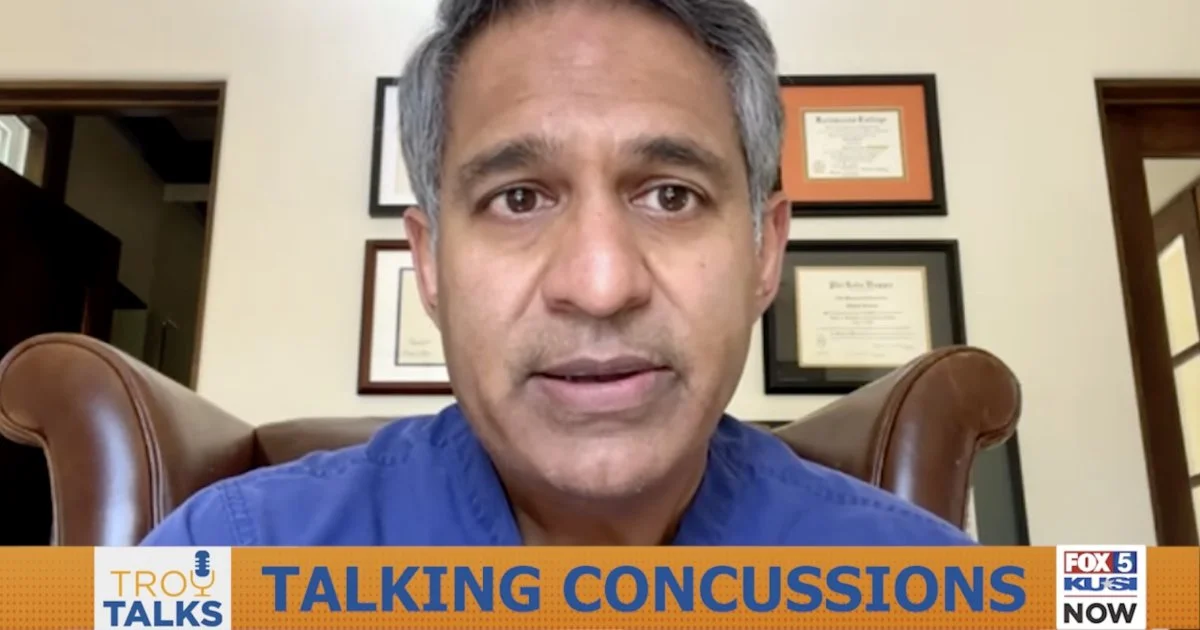
Watch the full segment on Fox 5 KUSI Now (Troy Talks)
Oxeia's Chief Scientific Officer Dr. Vishal Bansal, also Director of Trauma Surgery at Scripps Mercy Hospital in San Diego, joined sports anchor Troy Hirsch on Troy Talks (Fox 5 KUSI Now) to talk about why female athletes are showing more severe and longer-lasting concussion symptoms than their male counterparts, and the work his team is doing to bring the first FDA-approved drug for concussion to market. In 2026, there is still not a single one.
On why female athletes face unique concussion risk:
"The head is naked and so you're getting hit hard with balls, you're getting hit hard with other players."
On why concussions in girls look different:
"Currently we think that girls that suffer concussions generally have more symptoms on the outside. And generally these symptoms do last a little bit longer. We're unclear on why that's the case."
On the discovery that started Oxeia:
"In that lab we discovered that… ghrelin, which is produced in our body, it's a natural occurring hormone, has incredible effects on preventing brain injury… This will be the first of its class medication that can help with concussion symptoms."
OXE103 is based on ghrelin, a naturally occurring hormone produced in the body that Dr. Bansal's UCSD lab found to have remarkable effects on preventing brain injury. In a Phase 2a study run out of the University of Kansas Medical Center, OXE103 produced an almost 85% responder rate in patients with persistent concussion symptoms compared to those who didn't receive the drug.
Oxeia is now fundraising on StartEngine for Phase 2b: a 160-patient, multi-site, randomized, placebo-controlled trial planned to begin later this year, on the path to what could be the first FDA-approved drug for concussion. Oxeia's board includes former NFL quarterback Alex Smith, with former Seahawks cornerback Richard Sherman serving as an advisor.
Join the mission to bring the first FDA-approved treatment for persistent concussion symptoms to market.
Invest nowThis Reg CF offering is made available through StartEngine Primary LLC, member FINRA/SIPC. This investment is speculative, illiquid, and involves a high degree of risk, including the possible loss of your entire investment.
Alex Smith Featured in Concussion Alliance: Concussions, the Threat to Football, and a Potential Concussion Medication
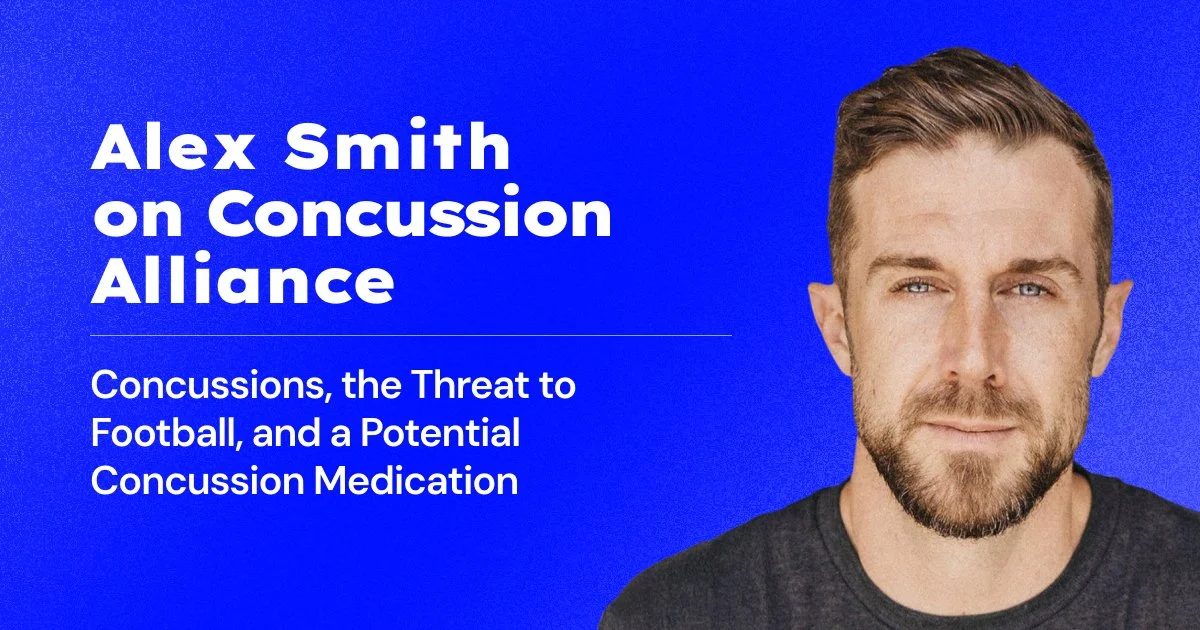
Listen to the interview and read the full transcript on Concussion Alliance
Oxeia Board member and former NFL star quarterback Alex Smith just sat down with Concussion Alliance to talk about his concussion history, from a ski accident at age 10 to the concussion that cost him his starting job in San Francisco, and why, after nearly 25 years of football, he believes concussions are "the biggest existential threat to American football."
On the state of concussion medicine today:
"In the background with concussions, there's nothing. There is nothing. It is a giant nothing. There's no test to even tell you if you definitively have one. This is all symptom-based… No treatment. Just nothing. Rest and wait. It's the same recommendation doctors have been giving out for over a hundred years."
On why he joined Oxeia's Board of Directors:
"To see an 85% responder rate that improved, versus a 33% who are dealing with standard of care — it was even more encouraging… A chance to do something nobody's done."
OXE103 is a form of human ghrelin, a hormone primarily produced in the gut that freely crosses the blood-brain barrier. In Oxeia's Phase 2a study, patients treated with OXE103 had improved symptom and quality-of-life scores (using the Post-Concussion Symptoms Score and the Quality of Life after Brain Injury scales) compared to those receiving standard therapy, with an 85% responder rate vs. 33% on standard of care.
Oxeia is now fundraising on StartEngine for our Phase 2b clinical trial of OXE103 (160 patients, double-blind, multi-site), targeting the underlying metabolic disruption and brain injury that follow concussion.
Join the mission to bring the first FDA-approved treatment for persistent concussion symptoms to market.
Invest nowThis Reg CF offering is made available through StartEngine Primary LLC, member FINRA/SIPC. This investment is speculative, illiquid, and involves a high degree of risk, including the possible loss of your entire investment.
Dr. Vishal Bansal on Life After Impact: The Concussion Recovery Podcast
In 2012, our co-founder Dr. Vishal Bansal was sitting in a corner office at UCSD, reading scientific literature on the gut-brain axis, when he found one paper showing that a hormone produced in the stomach helped injured neurons regenerate. He just sat down with Dr. Ayla Wolf on the Life After Impact podcast to tell the full story.
On why concussion has no drug treatment:
"For mild brain injury, we really have no treatment. We just basically tell patients you have to rest, you'll get better, take Motrin as needed, Tylenol as needed. Many of our patients have symptoms that last for months, sometimes even years."
On the discovery that started Oxeia:
"When you stimulated [brain cells] with a hormone called ghrelin, those neurons regenerated. And that was my aha moment."
Oxeia's Phase 2a trial at the University of Kansas Medical Center, published in Neurotrauma Reports, showed an 85% responder rate. To our knowledge, it is the first meaningful improvement in persistent concussion symptoms from any drug candidate. There has never been an FDA-approved drug treatment for concussion. We are working to build the first.
Episode courtesy of Life After Impact with Dr. Ayla Wolf.
Join the mission to bring the first FDA-approved treatment for persistent concussion symptoms to market.
Invest nowThis Reg CF offering is made available through StartEngine Primary LLC, member FINRA/SIPC. This investment is speculative, illiquid, and involves a high degree of risk, including the possible loss of your entire investment.
Dr. Michael Wyand on The Innovation Blueprint Podcast
Oxeia CEO Dr. Michael Wyand recently sat down with Phil Therien on The Innovation Blueprint podcast for a candid conversation about concussion, OXE103, and what it actually takes to build a treatment for an injury the medical system has overlooked for decades.
Here's what he had to say about why concussion was ignored:
"There have been no concussion drugs that have ever had data submitted to the FDA. Now we know it's severe—it leads to dementia, it leads to chronic traumatic encephalopathy. But the brain, we can't see it. It's not like somebody twists their knee and they're limping. So it was ignored."
He also broke down what actually happens inside the brain:
"Shock waves cause your brain to depolarize. All the brain cells in your head just get active and fire off their energy. It's like draining the battery. The battery of the brain just drains down. And that happens instantaneously."
Oxeia's Phase 2a trial showed an 85% responder rate vs. 33% standard of care—what the company believes is the first meaningful improvement in persistent concussion symptoms from any drug candidate. The Phase 2b trial is next.
Podcast courtesy of The Innovation Blueprint and Webisoft.
Join the mission to bring the first FDA-approved treatment for persistent concussion symptoms to market.
Invest nowThis Reg CF offering is made available through StartEngine Primary LLC, member FINRA/SIPC. This investment is speculative, illiquid, and involves a high degree of risk, including the possible loss of your entire investment.
Alex Smith on Golic & Golic
Former NFL quarterback and Oxeia board member Alex Smith joined Golic & Golic on FanDuel Sports Network to discuss the Super Bowl, quarterback play, and his work with Oxeia Biopharmaceuticals to advance concussion treatment.
Alex explained why progress has stalled: "There are no tests for a concussion. There are no approved treatments for a concussion. The recommendations from a doctor are the same they were 20, 40, 50, 100 years ago. It's rest up, eat well. There's nothing that's approved at this point."
After 16 years in the NFL experiencing persistent concussion symptoms firsthand, Alex joined Oxeia's board. OXE103 demonstrated an 85% responder rate versus 33% for standard care in Phase 2a trials. The next step is Phase 2b trials toward FDA approval.
Join the mission to bring the first FDA-approved treatment for persistent concussion symptoms to market.
Invest nowThis Reg CF offering is made available through StartEngine Primary LLC, member FINRA/SIPC. This investment is speculative, illiquid, and involves a high degree of risk, including the possible loss of your entire investment.
Alex Smith on ESPN's The John Keim Report: "Here's a Company Actually Trying to Do Something"
Former NFL quarterback and Oxeia board member Alex Smith joined ESPN's The John Keim Report to discuss his work with Oxeia, why concussion treatment hasn't changed in "a hundred years," and the cost to football as "superstars miss games every week."
After 16 years in the NFL experiencing persistent concussion symptoms firsthand, Alex joined Oxeia's mission to bring OXE103, which demonstrated an 85% responder rate versus 33% for standard care in Phase 2a trials, through Phase 2b trials toward FDA approval.
Join the mission to bring the first FDA-approved treatment for persistent concussion symptoms to market.
Invest nowThis Reg CF offering is made available through StartEngine Primary LLC, member FINRA/SIPC. This investment is speculative, illiquid, and involves a high degree of risk, including the possible loss of your entire investment.
Alex Smith on The Dan Patrick Show: "There Are No Approved Treatments for Concussions"
Former NFL quarterback and Oxeia board member Alex Smith joined The Dan Patrick Show to talk about his 2012 concussion at Candlestick Park, playing through severe vision problems to throw a touchdown pass, and why treatment remains stuck in the "Stone Age."
After 16 years in the NFL experiencing persistent concussion symptoms firsthand, Alex joined Oxeia's mission to bring OXE103, which demonstrated an 85% responder rate versus 33% for standard care in Phase 2a trials, through Phase 2b trials toward FDA approval.
Join the mission to bring the first FDA-approved treatment for persistent concussion symptoms to market.
Invest nowThis Reg CF offering is made available through StartEngine Primary LLC, member FINRA/SIPC. This investment is speculative, illiquid, and involves a high degree of risk, including the possible loss of your entire investment.
Dr. Wyand and Dr. Vishal Bansal on Recovery Now: Why Concussion Treatment Needs to Evolve
CEO Dr. Michael Wyand and Co-Founder Dr. Vishal Bansal joined Recovery Now host Kim Justus to discuss the science behind OXE103, how Ghrelin works in the brain, and why current concussion treatment needs to evolve beyond "sit in front of the window and watch a squirrel."
The Phase 2a results showed an 85% responder rate versus 33% for standard care at the University of Kansas Medical Center. The next step is a 160-patient Phase 2b trial that could position OXE103 as the first FDA-approved treatment for persistent concussion symptoms.
Join the mission to bring the first FDA-approved treatment for persistent concussion symptoms to market.
Invest nowThis Reg CF offering is made available through StartEngine Primary LLC, member FINRA/SIPC. This investment is speculative, illiquid, and involves a high degree of risk, including the possible loss of your entire investment.
Can Any Good Come from the NYC NFL Shootings?
In a three-page suicide note found in his wallet, former high school football player Shane Tamura re-opened a decades old controversy the NFL would rather be done with. The $23B league admitted back in 2016 that there is a link between football and degenerative brain disorders like CTE but maintains it can’t be solely responsible for solving the sport’s concussion crisis. We won’t know if Tamura, the gunman who opened fire at the NFL’s New York office building had CTE until an exhaustive autopsy is performed. Regardless, he clearly sought vengeance against the league for not doing enough to protect football players of all ages.
Who should be leading the charge to eradicate brain injury from contact sports like football? The NFL can play a role, but is it fair to dump so much of the burden on a single organization despite their massive war chest?
But whose job is it to fix the problem? We can’t blame any one individual or organization for brain injuries sustained in sports.
Extensive research and development need to be done to not only improve brain injury diagnostics. But also to find effective treatments for our athletes from pee wee football to NFL players, as well as everyone else who may get concussed from something as mundane as a slip and fall in the kitchen. The problem is that venture capital and other major investors haven’t made brain injury enough of a priority in recent decades. Investors are pursuing opportunities they believe will be the most lucrative. Today that means many investment dollars are going to cancer research as well as to the development of medical AI tools and a handful of other areas. Sadly, not much interest has been focused on concussions and repetitive head injuries which could lead to bigger maladies such as CTE.
Millions of Americans each year, perhaps up to 7 million annually, suffer concussions. Parents worry about their children playing the sport they love because of the fear of brain injury. Contact sports fans express concern about the possible cancellation of their sport because of safety issues. While big-time investors may eschew brain injury innovations, the public is certainly and increasingly clamoring for them.
We hope no one else takes it upon themselves to take such drastic action as Tamura did. Killing innocent people is never a good means to an end. We do see Tamura’s actions, however, as a sign that the public wants more to be done regarding brain injury. Silent for too long, the concussed want to see action.
Unfortunately, in many ways we are heading in the wrong direction. The federal government is reducing necessary research. It will take the voices of the tens of millions impacted by brain injury to turn the tide. We must demand investors and Big Pharma pay more attention and provide more funding for brain injury research. Small investors can also make a big difference. While contributions may be modest from individuals, enough small investors can add up to enough capital to get the wheels on brain research and development turning and moving forward. It also shows big investors the market potential for concussion treatments.
Michael Wyand, DVM, PhD is the CEO and Director of Oxeia Biopharmaceuticals, Inc.
2024 NFL Season Ends with Good News about Concussions. But Will it be Enough?
Just a few weeks after the National Football League season ends Brain Injury Awareness Month begins. Millions of Americans will experience a concussion in the coming year. Only a relative handful of these individuals will be athletes -- most of those to get concussed will be regular folks like you and me. We won’t suffer anything as spectacular as an interception on the gridiron, maybe we just slip and fall… it won’t be televised to millions, but it will be significant to us.
We highlight the problem of concussions in pro sports because they’re attention-grabbers. The NFL concussion problem helped open the door a couple of decades ago to the real concussion crisis that is gripping so many Americans and others around the world.
Richard Sherman, one of the NFL’s greatest cornerbacks of all time and an Oxeia Biopharmaceuticals Advisory Board Member, tells me he’s pleased with new statistics from the league that concussions are down 17% compared to last season. But he notes, “There is still much work to be done to protect players.”
The NFL’s Jeff Miller recently announced the new concussion stats crediting improved equipment, rule modifications and continued culture change. These are all very good changes, but Richard is correct, while the NFL is moving in the right direction, more needs to be done to keep players safe. Neurotrauma is no joke. A 2019 study found CTE in 90% of the deceased layers examined posthumously.
What will it take to stop concussions in its tracks for football players as well as other athletes and anyone else who injures their brain? At Oxeia we’ve been researching a treatment we believe can make a significant difference. We’re not alone, other biopharmaceutical companies are doing the same.
With better funding, Oxeia will be ready to start Phase IIb trials for OXE103, synthetic human ghrelin, to treat concussions/mTBI. OXE103 is synthetic human ghrelin, an endogenous hormone. OXE103 freely crosses the blood-brain-barrier and is now being tested in humans to potentially treat concussions by addressing underlying neuro-metabolic dysfunction and axonal injury. OXE103 uniquely targets the hippocampus region of the brain, an area important for cognition and memory.
Initial Phase IIa clinical trials completed at University of Kansas for OXE103 show signs we’re making progress. Study author Dr. Michael Rippee reported to the Archives of Physical Medicine and Rehabilitation (ACRM) “the results from this study indicate that ghrelin therapy is a promising and potential therapeutic to treat post-concussion patients suffering from ongoing ymptom burdens.” The results showed an 85 percent response rate in those treated with OXE103, versus a 33% response rate in those who received standard of care. The data allow us to proceed to a larger clinical trial conducted at multiple sites across the U.S.
This is all very good news. But the process takes time. In addition to the time needed to do testing, raising capital to pay for the clinical trials is a concern for the various small biotech ompanies like ours trying to bring a concussion treatment to market. Investors got scared away from neurotrauma innovation for severe brain injuries during the 90’s and 2000’s when many treatments in development failed. Today’s landscape is different. Companies are focused on treating concussions rather than severe brain injury. This is where OXE103 can make a difference.
As the father of a former college football player and a lover of the sport, I’m glad to hear some of the steps implemented by the NFL have made a dent in the problem. If we want to protect football and other sports where concussions are prevalent, like hockey and boxing, we must push the boundaries of medical innovation. A concussion treatment is possible. We will continue working to advance our treatment for mild traumatic brain injury, injuries that therwise can lead to a lifetime of debilitating symptoms and other neurologic consequences.
This March during Brain Injury Awareness Month think about all of those who are suffering from brain injury. To move the needle on brain injury research biotech companies like ours need more funding. We are counting on investors and philanthropists passionate about finding treatments for brain injury to come forth. We invite those among us who have seen firsthand how concussions can ruin sports careers and more importantly athletes’ lives, to become a part of this nascent health revolution. Please join us in our pursuit.
Michael Wyand, DVM, PhD is the CEO and Director of Oxeia Biopharmaceuticals, Inc.
NFL heroes like Brett Favre and Tua Tagovailova are proof we need to do more about Brain Injuries
Legendary NFL quarterback Brett Favre revealed he received a diagnosis of Parkinson’s disease inJanuary. According to Favre, five specialists have told him that his Parkinson’s probably resulted from the hits he sustained in his 20 years in the NFL. Favre, who has been outspoken about his history of concussions, believes he sustained not dozens or hundreds, but likely thousands of concussions during his career.
In recent years, we’ve come to understand the toll brain injury takes on athletes playing contact sports. Studies of the brains of deceased former NFLers have shown a strong link between repeated hits to the head and CTE, a progressive brain disease. Studies have similarly identified a connection between traumatic brain injury and Parkinson’s disease.
Changes have been made by the NFL in rules, protocol and helmets. The result: we have made the game safer but have not and will never eliminate concussions, repeated brain injuries, and their aftermath.
The concussion epidemic and repeated head impacts are rightly getting much more attention, but more needs to be done. We need to continue to advance our understanding of the brain and the link between head impacts and neurodegenerative diseases so we can develop effective treatments. While we watch and sympathize as former football players and other athletes struggle with dementia, Parkinson’s, ALS, depression and suicidal thoughts, it becomes clearer and clearer, that we need to find therapeutic approaches to treat the underlying damage from a traumatic brain injury. We need greater private investment in research and development of effective treatments. The Federal Government must increase funding to credible companies conducting research and development in this field.
Science is our only real solution to turning the corner on our understanding and successful treatment of brain injuries and neurodegenerative diseases. We see our NFL heroes like Brett Favre in the past and Tua Tagovailoa in the present suffer from injuries sustained on the field and it makes headline news. We need to protect those players or America’s love affair with football could be in jeopardy. We also must find a treatment to protect all Americans who suffer brain injuries – not just those on the playing field, but also those on the battlefield, on the road and in our own homes.
Michael Wyand, DVM, PhD, is CEO of Oxeia Biopharmaceuticals. Oxeia is conducting Phase 2 human clinical studies for its therapeutic drug, OXE 103, to treat concussions.
Chris Nowinski, PhD, is cofounder and CEO of the Concussion Legacy Foundation, cofounder of the Veterans Affairs-Boston University-CLF Brain Bank and an advisor to Oxeia Biopharmaceuticals. A former AllIvy defensive tackle for Harvard University and WWE professional wrestler, he suffers from PCS symptoms 16 years later.
The Pentagon Knows It Has a Problem with Veterans with TBI. New Data Shows its Extent.
Over a 15-year period, from 2006 – 2020, veterans with Traumatic Brain Injury (TBI) had suicide rates 56 percent higher than veterans without TBI and three times higher than the US adult population. This staggering statistic was published last month in JAMA Neurology.
The suffering of our veterans who are in such great pain with TBI is tragic. Imagine the scores of brave men and women who served their country but are now hurt so badly that suicide is their only escape from immense pain.
The US Department of Defense (DoD) is aware of its TBI problem. They have identified TBI as “one of the invisible wounds of war and one of the signature injuries of troops wounded in Afghanistan and Iraq.” The Pentagon is taking concussions seriously by helping to educate veterans and through work with the Defense Advanced Research Projects Agency (DARPA) to develop implants to help with TBI memory loss. However, as Frank Larkin, chair of Warrior Call, points out in Military Times, “The Pentagon’s blueprint for curtailing military suicides … is noteworthy for what it lacks –– scant if any reference to preventing, better diagnosing and treating traumatic brain injuries …”
The statistics on veteran suicides should be setting off more alarms at DOD. Such high suicide rates scream out the need to move with great urgency to not only prevent TBIs but also to improve long-term outcomes that ease the suffering of our soldiers and veterans with these conditions.
Oxeia is looking to work with the federal government and the military establishment to advance the study of treatment for TBI that will benefit not only our wounded warriors but also the greater population. We have been bringing our case to Capitol Hill over the past couple of years and believe we are inching closer to finding an effective cure for mild TBI.
We applaud the work the DoD is doing to ease the pain of our veterans. Oxeia would like more to be done to bring service men and women the relief they need. The treatment for TBI may just be at our doorstep.
One Million Americans go to Emergency Rooms after Falls each Year:Keep that in Mind on September 22nd and Everyday
September 22, 2023 is Fall Prevention Awareness Day. We don’t expect big festivities for this occasion, but we hope maybe some Americans will take the time to think about the dangers of a most common problem: falling.
Oxeia takes fall prevention awareness seriously. Falls are the most common cause of concussions.
Brain injuries that are the result of spectacular tackles, jabs, or body checks generate the greatest news interest. But athletes are not the only people getting concussions. We are aware of the power sports have on concussion awareness. After all, Oxeia has Alex Smith on its board of directors and Richard Sherman on our board of advisors. Ultimately, we know that our dedication to finding a treatment for concussions is of importance to a far greater number of people who slip or fall in the kitchen, bathroom, or on the worksite floor than meet an unexpected fate at the hands of a tight end.
Here are some facts about falls to warrant your interest:
One million seek emergency room treatment for falls; that translates to 2,000 ER-worthy falls per day in the USA alone. And the number of unreported concussions from falls is likely at least double that number.
Slips and falls account for one-eighth of 8 million injuries and deaths each year in the USA.
Slips and falls are the primary cause of occupational injuries for folks over age 55.
According to a Centers for Disease report issued earlier this month, the leading cause of injury and death among adults aged 65 and older is unintentional falls.
Many falls may be destined to happen, but the truth is that many can easily be avoided. The easiest thing you can do, simply put, is to be mindful of where you are walking. Think about the kind of surface you are walking on. Wet and uneven surfaces are dangerous. Look out for parking lot potholes and torn carpeting. And mind your footwear! 24% of falls occur when people wear improper shoes. Sure 6-inch heels are a problem, but also be aware of any footwear lacking traction.
We Need More Than Awareness of Concussions, We Need a Cure
September 15th is National Concussion Awareness Day. Awareness of concussions (also known as mTBI or mild traumatic brain injury) and their potential for long-term consequences has heightened over the past decade. Much of this is thanks to the media coverage about concussions from sports; falls, military blasts, workplace accidents, domestic violence, as well as motor vehicle, bicycle, and e-scooter crashes. Yet despite this increased understanding of the potential for long-term and often debilitating effects of concussions, we have made remarkably little progress in finding effective treatments.
An estimated 7 to 21 million reported and unreported people sustain concussions a year in the U.S. Twenty percent of these – or 1.4 to 4.2 million – have ongoing post-concussion symptoms for months and years following their injury. These debilitating symptoms require ongoing physical, speech, cognitive, vision, occupational and/or drug therapies. Studies have also linked mTBI with depression and PTSD, and repeated mTBIs with various neurodegenerative diseases. For example, studies have shown that veterans with a history of mTBI have a 56% higher risk of developing Parkinson's disease within 12 years of their injury,
Concussion awareness is essential to preventing concussions, recognizing and reporting a concussion and getting medical care. But since we’ll never be able to eliminate concussions, we need more than that. The tangible and intangible costs to patients, their families and the larger community are significant. The American Association of Neurological Surgeons puts annual direct and indirect costs of the full spectrum of TBIs – from mild to severe – are $76.5 billion. Approximately 75% of all TBIs are mTBI.
To date, the U.S. Food and Drug Administration has not approved any drug that is specifically indicated for concussions. However, several companies, including our company, Oxeia Biopharmaceuticals, are actively developing and testing new drugs to treat this devastating indication. Small bioiopharmaceutical companies like ours need funding to advance research so we can develop treatments not only for a concussion’s immediate symptoms, but for the underlying damage. Perhaps those with a vested interest in finding a cure, such as sports organizations, the media, the military and others should step up to the plate to help accelerate efforts toward finding an effective therapeutic for this unmet medical need. Rest is not enough.
CONVENIENT, ECO-FRIENDLY AND COST-EFFECTIVE MICROMOBILITY ALTERNATIVES TO GASOLINE POWERED CARS RESULTING IN MORE HEAD INJURIES
In a recent article in Forbes , Tanya Mohn reported that the risk of head injury in a crash is high for e-scooter riders. According to the research by the Germany-based, DEKRA the risk of concussion was nearly 100%. A 2021 study conducted by the University Hospital Zurich and St. George’s University School of Medicine, Granada, compared injuries among bicycle, e-bike and motorcycle accidents. This research found that injuries were more frequent in e-bike a (66%) and bicycle accidents (64%) than motorcycle accidents (47%). (Other types of injuries were more frequent for motorcyclists.)
A U.S. Consumer Product Safety Commission report showed a 127 percent increase in electric micromobility devices from 2017-2021. While they provide convenient, eco-friendly and cost-effective alternatives to gasoline powered cars, the expected explosive growth products such as e-scooters and e-bikes, will also bring increasing numbers of head injuries. The CPSC offers safety tips for people riding e-scooters, e-bikes and hoverboards:
Always wear a bicycle helmet.
Before riding, make sure to check for any damage, which includes examining the handlebars, brakes, throttle, bell, lights, tires, cables and frame.
See and be seen. Most deaths involve motor vehicles. Many micromobility products are small, quick, and silent, making it difficult for others to spot you, especially in parking lots and structures.
Expect vehicle drivers and pedestrians not to see you; slow down and stay aware of your surroundings.
Use the bell/horn to alert others.
Do not make abrupt, unpredictable movements.
Beware of obstacles. E-scooters have small tires, so objects and uneven surfaces can cause them to stop suddenly, throwing you off.
Always keep both hands on the handlebars and keep items off the handlebars.
Slow down and lean back when you have to ride over bumps.
Never ride under the influence of alcohol or drugs.
Only one person per e-scooter; additional riders can increase the risk and severity of collisions.
Follow all manufacturer directions, review the safety information and identify and weight and age limits for the micromobility product.
You can find more safety information at the Consumer Safety Commission website: https://www.cpsc.gov/Safety-Education/Safety-Education-Centers/Micromobility-Information-Center
Here at Oxeia Biopharmaceuticals, we are developing new, innovative therapeutics for mild traumatic brain injury (mTBI), known as concussion. Our aspiration at Oxeia is for people to stay safe and take steps to avoid concussions in their everyday lives, and to bring relief to those who have sustained a concussion.
Preventing Workplace Concussions: Good for Employees and Employers
You’re probably not likely to get a concussion while working a desk job. There could be a falling box incident or a slip in the break room on somebody’s spilt coffee event, but you aren’t likely to fret over the possibility of a brain injury in the safety of your cubicle. Your chances of head injury, however, do increase if you work a more physical job, like on a construction site or in a factory. Overall, reports of at-work concussions are nowhere near the number of concussions sustained by professional football players or slip-and-fall senior citizens, but that doesn't mean we should ignore them.
While we may be pleased to hear that 91 percent of workers return to their jobs within 90 days of their accidents, there is still 9 percent of our workforce missing for an extended period and among the 91 percent of returnees, many of them may still be experiencing concussion symptoms. Workplace USA is not suffering as greatly from a concussion epidemic as the NFL is, but there are still many concerns about how head injuries at work are addressed. Any employees missing from their jobs, possibly out on workmen’s comp, represent a cost to a company’s bottom line and having staff who come to work with a perpetual headache or other ongoing post-concussion symptoms isn’t good for employees, their families or employers either.
Safe + Sound Week 2023 is upon us (August 7 – 13), a nationwide event that recognizes the success of workplace health and safety programs and offers information and ideas on how to keep American workers safe. There are many kinds of workplace safety issues that deserve attention. As an employer look at your workplace and listen to your employees’ suggestions to take steps to safeguard your workers from concussions.
In a recent study, only one in ten working patients seen with concussions in the emergency room were injured at work. According to the U.S. Centers for Disease Control and Prevention, almost three million patients with suspected brain injury visit the emergency room every year in the U.S.
Other studies indicate an even bigger problem with estimates of five million patients visiting emergency departments (ED) every year to be evaluated for a head injury. Approximately one-half are diagnosed with a TBI and as many as 95% of those with suspected TBI have mild TBI. This translates into 142,000-237,500 people with workplace concussions visiting the emergency room yearly. However, considering that an estimated five in 10 concussions go unreported, the number of workplace concussions is likely significantly higher.
We should consider what we can do to decrease this number. Supervisors, building managers and employees can help reduce the risk of falls, falling objects and bumps to the head by:
Providing protective equipment (PPE) in situations where warranted, like warehouses and factory floors. Make sure PPE is used and not sitting idly on the sidelines.
Remove tripping hazards and make sure walkways and workspaces are free of clutter, cords, puddles – or anything that can cause a slip, trip or fall.
Conduct regular inspections of the facility with an emphasis on walking and working surfaces.
Improve signage to alert employees of wet or slippery surfaces and low overhands or limited overhead clearance.
Clean and organize shelves and storage area spaces to avoid falling objects.
Don’t stand on desks or chairs, get a ladder instead.
Learn more about Safe + Sound Week and developing or improving your company’s workplace safety at : https://www.osha.gov/safeandsound/safety-and-health-programs
Watch for Concussions In Water Sports
The warm weather is here and many of us head to outdoor pools, the beach, lakes, swimming holes and rivers for summertime fun. We hear a lot about concussions in contact sports, but not so much about water sports such as tubing, surfing, jet skiing, wake boarding, water skiing, white water rafting and, even, swimming. Yet emergency departments see a lot of head injuries from water sports every year.
When a water skier hits the water at high speeds from a fast-moving boat, the water is like concrete. A jolt to the head can occur when being pulled behind a boat on a board or inner tube in choppy water can cause a concussion. While swimming isn’t supposed to be a contact sport, accidental contact with other swimmers, hitting one’s head when diving, diving incorrectly and hitting the pool wall can and frequently do result in concussions.
Since one doesn’t have to hit his or her head or be knocked unconscious to have a concussion, it’s important to be able to recognize the symptoms. Concussion symptoms include chronic headaches, depression, problems with thinking and memory, vision and balance issues, and sleep disorders.[1] Sometimes the person cannot recognize the symptoms him or herself, do not want to admit to the symptoms and/or don’t want to stop the sport or activity. As many as five in ten concussions in sports go unreported or undetected.[2] This means that friends, coaches and others often need to be the ones to recognize the symptoms and seek medical attention for the person with a suspected concussion.
The Mayo Clinic provides a list of physical signs and symptoms to watch for at: https://www.mayoclinic.org/diseases-conditions/concussion/symptoms-causes/syc-20355594
Here at Oxeia Biopharmaceuticals, we are developing new, innovative therapeutics for mild traumatic brain injury (mTBI), known as concussion. Our aspiration at Oxeia is for people to stay safe and take steps to avoid concussions in their everyday lives, and to bring relief to those who have sustained a concussion.
[1] https://www.mayoclinic.org/diseases-conditions/concussion/symptoms-causes/syc-20355594